

Why We Monitor Your Clear Aligner Treatment
Clear aligner treatment doesn't only happen when you're sitting in the dental chair.
Between appointments, your teeth are continuing to move, your aligners are being worn and your treatment is progressing through its planned stages.
That's why monitoring matters.
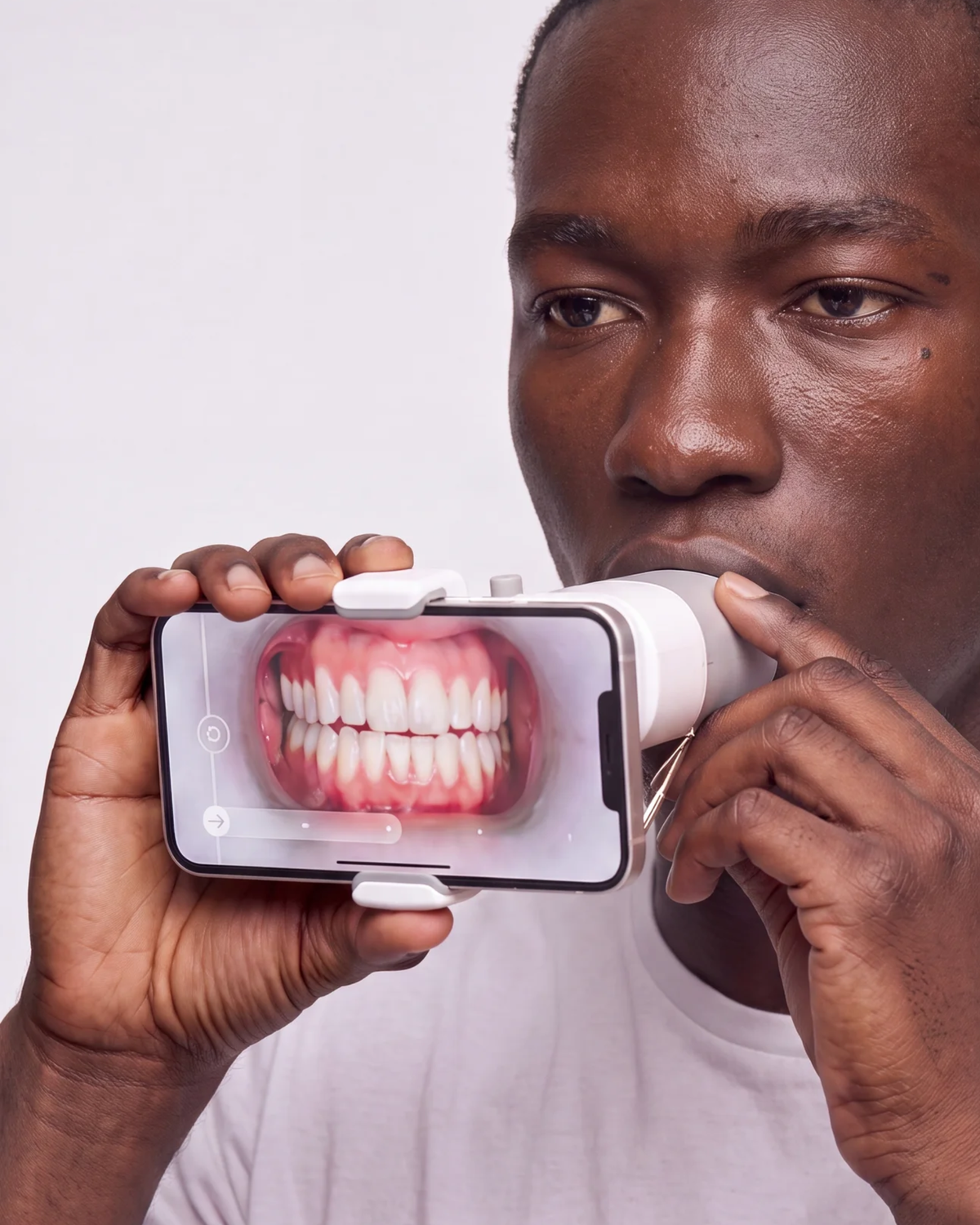
Aalto uses Scanbox and digital dental monitoring to help your treating dental team keep track of your progress between appointments.
It gives your clinical team greater visibility into what's happening during treatment without requiring every check to take place in person.
What is Scanbox?
Scanbox is a system that helps patients capture consistent images of their teeth at home.
Rather than taking random photographs with a phone, the system is designed to help capture images in a consistent format so that your dental team can review changes over time.
Your treating dental team can use these images alongside other clinical information to monitor your treatment.
Why does clear aligner treatment need monitoring?
Every patient responds differently to orthodontic treatment.
A digital treatment plan can show how your teeth are expected to move, but biology isn't completely predictable.
One tooth may move faster than another. An aligner may not fit exactly as expected. An attachment may come loose. You may experience an issue that needs attention.
Regular monitoring gives your dental team an opportunity to identify potential issues rather than waiting until your next scheduled appointment.
What can monitoring help identify?
Your dental team may use monitoring to look at things such as:
-
Whether your aligners appear to be fitting correctly
-
Whether teeth are tracking as expected
-
Whether an attachment has become loose
-
Changes in your gums or oral tissues
-
Whether treatment appears to be progressing as planned
-
Whether additional clinical review may be required
Monitoring doesn't mean that every small difference is a problem.
Instead, it provides another source of information that helps your dental team make informed clinical decisions.
How does a Scanbox check work?
Your treating dental team will tell you when your scans are required and how often you need to complete them.
You'll follow the instructions provided to capture images of your teeth.
Those images can then be reviewed by the appropriate clinical team.
Because the process can be completed remotely, it can reduce the need for unnecessary trips to the clinic while still giving your dental team regular visibility of your treatment.
Does Scanbox replace appointments?
No.
This is an important distinction.
Remote monitoring supports clinical care; it doesn't replace your dentist.
Your treating dentist remains responsible for your clinical care and decides when an in-person examination is required.
If something identified through monitoring requires closer assessment, your dental team may ask you to attend the clinic.
Some parts of dental care simply cannot be assessed properly through photographs or remote monitoring.
Why are regular scans important?
It can be tempting to think of your scans as another administrative task.
They're not.
Your treatment depends on your teeth moving in response to the forces created by your aligners. If your teeth aren't tracking as expected, your clinical team needs to know.
Regular scans provide a way of checking progress between appointments.
They can also help your dental team understand whether you are ready to progress to another stage or whether something needs to be reviewed first.
What happens if my teeth aren't tracking?
If monitoring suggests that a tooth isn't moving as expected, your dental team can assess the situation and determine the appropriate next step.
That might involve:
-
Continuing with the current aligner
-
Extending the time spent in a particular stage
-
Providing additional instructions
-
Reviewing your aligner fit
-
Asking you to attend the clinic
-
Modifying the treatment plan
-
Providing refinement aligners later in treatment
The appropriate response depends entirely on the individual case.
What if I miss a scan?
If you miss a scheduled scan, follow the instructions provided by your dental team.
If you're having difficulty completing your scans, let them know.
Consistent monitoring is most useful when scans are completed when requested, because your clinical team needs reliable information to assess your progress.
What does monitoring mean for patient convenience?
One of the biggest benefits of digital monitoring is convenience.
Instead of requiring every check to happen in person, some routine progress checks can be completed remotely.
That can mean fewer unnecessary trips to the clinic while still allowing your dental team to stay informed about your treatment.
However, convenience should never come at the expense of clinical care.
If your dentist needs to see you in person, you should attend the appointment.
Why Aalto uses digital monitoring
Aalto's treatment model combines clear aligner technology with dental care and digital monitoring.
Your treatment isn't simply a sequence of aligners that you receive and manage without professional oversight.
Your dentist needs to understand how your teeth are responding throughout the process.
Scanbox provides an additional way to share information between appointments, helping connect the patient, the treating dental team and the treatment plan.
What should patients do during monitoring?
The most important thing you can do is follow your treatment instructions.
That includes:
-
Wearing your aligners as instructed
-
Completing Scanbox scans when requested
-
Keeping your aligners clean
-
Maintaining good oral hygiene
-
Reporting problems promptly
-
Attending in-person appointments when requested
Remote monitoring works best when patients actively participate.
Frequently Asked Questions
What is Scanbox used for?
Scanbox helps patients capture consistent images of their teeth for remote treatment monitoring. These images can be reviewed by the treating dental team as part of ongoing care.
Does Scanbox replace my dentist?
No. Scanbox is a monitoring tool and does not replace clinical assessment or your treating dentist.
How often do I need to scan?
Your treating dental team will tell you how often scans are required based on your treatment plan.
What happens if I forget a scan?
Follow the instructions from your dental team. If you're unsure what to do, contact them rather than simply skipping the scan.
Can Scanbox tell if my teeth are moving correctly?
The images captured through monitoring can provide useful information about treatment progress. Your clinical team uses that information alongside other clinical considerations to determine whether treatment is progressing appropriately.
Do I still need dental appointments?
Yes. Remote monitoring does not eliminate the need for appropriate in-person dental care.
The bottom line
Clear aligner treatment is a process, not simply a box of trays.
Your teeth are changing throughout treatment, which is why monitoring is important.
Scanbox gives your dental team another way to see what's happening between appointments, helping them identify when treatment is progressing as expected and when something may need closer attention.
The aligners move your teeth. Monitoring helps your dental team understand how they're moving.


Share:
Introducing Aalto
Why Clear Aligner Prices Vary