

Have you ever looked at your smile and noticed that one tooth seems to sit differently from the rest?
You might call it a snaggletooth, crooked tooth or misaligned tooth. It could sit further forward, behind the surrounding teeth, twist slightly or appear higher or lower than the teeth beside it.
For some people, it's simply a feature they don't mind. For others, a single crooked tooth can be the reason they feel self-conscious about their smile.
The good news is that a misaligned tooth can often be treated. Depending on your teeth, bite and overall oral health, clear aligners may be one option for gradually moving the tooth into a more suitable position.
What Is a Snaggletooth?
“Snaggletooth” isn't a clinical diagnosis. It's a common term people use to describe a tooth that appears noticeably out of alignment with the teeth around it.
A snaggletooth might be:
-
Protruding further forward than the surrounding teeth
-
Sitting behind the neighbouring teeth
-
Rotated or twisted
-
Higher or lower than the teeth beside it
-
Crowded because there isn't enough space in the dental arch
The underlying cause and the type of tooth movement required are important when deciding how it should be treated.
Why Do Some Teeth Become Crooked?
There isn't always one reason for a misaligned tooth.
Common contributing factors can include:
Lack of Space
If there isn't enough room in the dental arch, a tooth may become crowded, rotated or pushed out of position.
Genetics
The size and shape of your jaw, the size of your teeth and the way your teeth develop can all influence alignment.
Childhood Dental Development
The early loss of baby teeth or other changes during childhood dental development can affect how permanent teeth come through.
Previous Orthodontic Treatment
Teeth can gradually move after orthodontic treatment, particularly if retainers aren't worn as recommended.
Other Dental Factors
Impacted teeth, missing teeth, changes in the surrounding bone or other dental conditions can also affect tooth position.
This is why an assessment is important before deciding how a crooked tooth should be treated.
Can Clear Aligners Fix a Snaggletooth?
In many cases, clear aligners can be used to move an individual misaligned tooth.
However, treatment isn't necessarily as simple as moving one tooth from point A to point B.
Your dentist needs to consider how the tooth fits within the rest of your bite and whether there is enough space for the movement required.
Depending on your treatment plan, creating space may involve techniques such as:
-
Minor expansion
-
Tooth movement within the dental arch
-
Interproximal reduction (IPR)
-
Attachments
-
Other orthodontic techniques
Your dentist will determine which approach is appropriate for your individual case.
How Do Clear Aligners Move a Crooked Tooth?
Clear aligners are custom-made to fit your teeth and apply controlled forces to gradually move them.
Each aligner represents a stage in your treatment plan.
As you progress through the series, your teeth are gradually guided towards their planned positions.
If you're treating a single noticeable crooked tooth, the aligners will generally be designed around the movement of that tooth while also considering the position of the surrounding teeth and your overall bite.
This is one reason treatment planning matters. A good result isn't simply about making one tooth look straight — it's about how that tooth sits within the smile and functions with the rest of your teeth.
Will I Need Attachments or IPR?
Not necessarily, but some cases require additional techniques to achieve the planned movement.
Attachments
Attachments are small tooth-coloured shapes bonded temporarily to selected teeth.
They give the aligner additional surfaces to grip and can help produce particular types of tooth movement.
Your dentist will determine whether attachments are appropriate for your treatment.
Interproximal Reduction (IPR)
IPR involves carefully removing a small amount of enamel from between selected teeth to create space.
It isn't required for everyone, but your dentist may recommend it if additional space is needed for your planned tooth movements.
Both attachments and IPR should only be performed when clinically appropriate and as part of your individual treatment plan.
How Long Does It Take to Straighten a Snaggletooth?
There isn't one treatment time for a snaggletooth.
A tooth that appears only slightly out of position may require a relatively straightforward correction, while a tooth that is significantly rotated, crowded or affected by the position of surrounding teeth may require more comprehensive treatment.
Your treatment time depends on factors including:
-
The starting position of your teeth
-
The amount and type of movement required
-
Your bite
-
Available space
-
How consistently you wear your aligners
-
How your teeth respond to treatment
Your dentist can give you a more accurate estimate after assessing your teeth and developing your treatment plan.
Are Clear Aligners the Only Option?
No.
The most appropriate treatment depends on your individual circumstances.
Traditional Braces
Fixed braces use brackets and wires to move teeth and can be suitable for a wide range of orthodontic concerns, including more complex cases.
Clear Aligners
Clear aligners are removable and discreet, making them a popular option for people who want to straighten their teeth without traditional brackets and wires.
Veneers or Cosmetic Dentistry
Veneers can change the appearance of a tooth without orthodontically moving it.
However, veneers are a cosmetic treatment rather than a method of correcting the underlying tooth position. They also involve permanently altering the tooth in many cases, so they aren't simply an alternative to orthodontic treatment.
Your dentist can explain which options are appropriate for your smile.
What If It's Only One Crooked Tooth?
This is a common question.
If one tooth is noticeably crooked, it can be tempting to assume that only that tooth needs to move.
In reality, your dentist may need to plan movement across several teeth to create enough space, maintain your bite or achieve a stable result.
So even when one tooth is the main concern, treatment may involve more than one tooth.
That's why a proper assessment is more useful than judging your suitability based on photographs or the appearance of one tooth alone.
Can a Snaggletooth Affect Oral Health?
A crooked or crowded tooth isn't automatically unhealthy.
However, teeth that overlap or sit in difficult-to-clean positions can sometimes make brushing and interdental cleaning more challenging.
If plaque is allowed to build up around crowded teeth, it can contribute to problems such as tooth decay and gum disease.
If you're concerned about a crooked tooth, your dentist can assess both its position and your overall oral health.
Is Aalto Clear Aligner Treatment Right for You?
Aalto treatment begins with an in-clinic assessment with a dental professional.
Your dentist can assess your teeth, gums and bite and determine whether clear aligner treatment is appropriate for your individual needs.
Where clear aligners are suitable, your treatment is planned around the movements required to achieve your intended result.
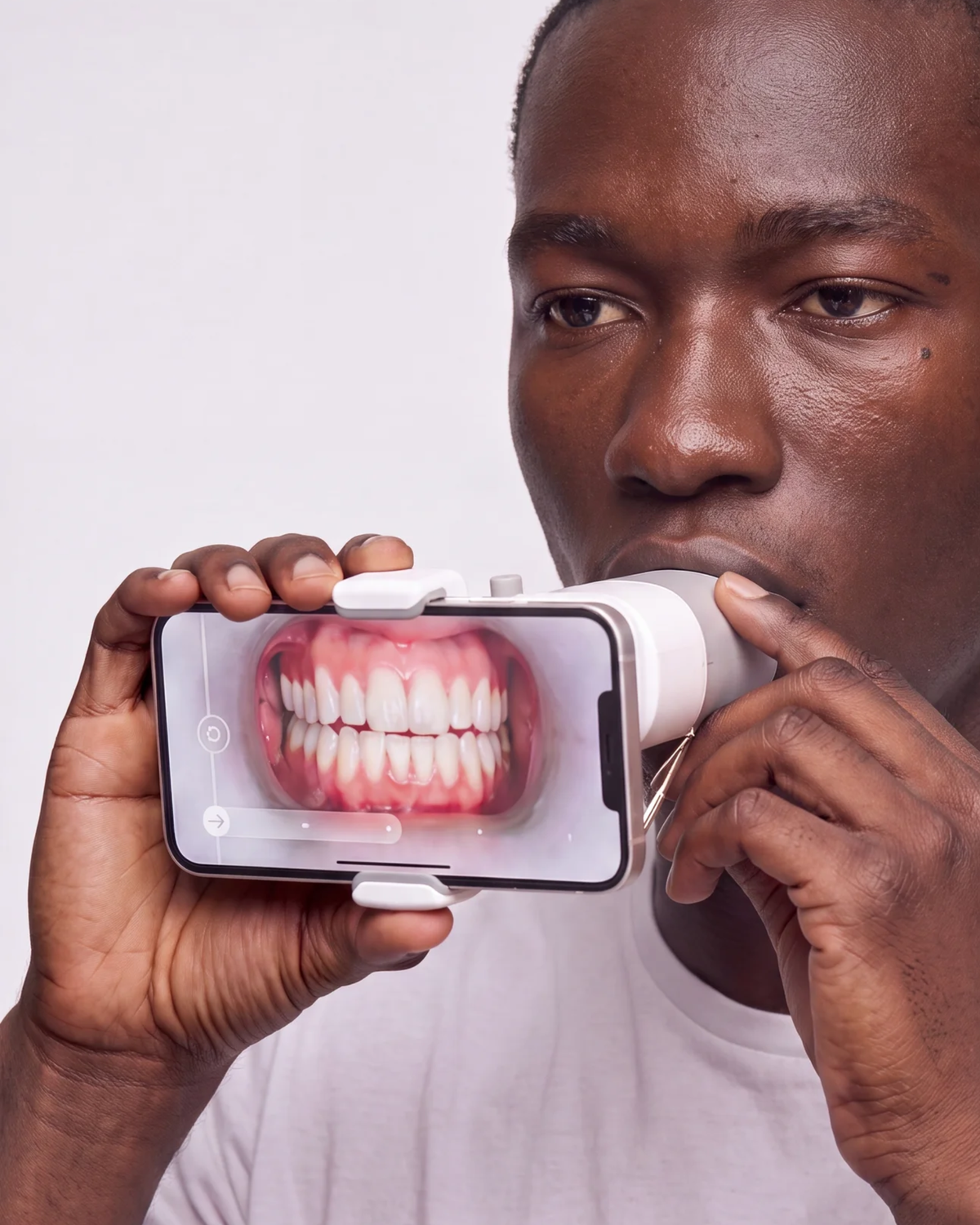
During treatment, digital monitoring can also help your clinical team stay connected with your progress between appointments.
The exact treatment approach will depend on your individual case.
What Happens Next?
If one crooked tooth has been bothering you for years, you don't necessarily need to live with it.
The first step isn't choosing between braces, aligners or cosmetic treatment.
It's understanding why the tooth is positioned the way it is and what can realistically be done to change it.
An assessment with a dental professional can help you understand your options and whether clear aligner treatment is appropriate for your smile.
The Bottom Line
A “snaggletooth” is simply a common way of describing a tooth that sits noticeably out of alignment.
Depending on the cause and the movement required, clear aligners may be able to gradually move the tooth into a more suitable position.
The important thing is that treatment should be based on your whole smile and bite, not just the appearance of one tooth.
If you're considering straightening a crooked tooth, an in-clinic assessment is the best place to start. Your dentist can assess your individual smile, explain your options and determine whether clear aligners are suitable for you.


Share:
How to Improve Gum Health
Clear Aligners for Teens 14+