


Clear aligners
Clear aligners can correct selected deep bites through planned tooth movements. Attachments, bite ramps or elastics may be included to help achieve the intended movements.
Explore clear aligners closer.
When your upper front teeth cover too much of the lower teeth, it’s called a deep bite. Look beyond straight teeth to understand your bite, the treatment options and what an assessment can tell you.
Take the smile quizA small vertical overlap between the front teeth is normal. A deep bite is an excessive overlap: the upper front teeth cover too much of the lower front teeth when the back teeth meet. You may hear it called a deep overbite.
That is different from overjet, which describes the horizontal distance between the upper and lower front teeth. Both can occur together. Your dentist looks at the overlap and the way all your teeth meet, rather than judging the bite from a smile photo.
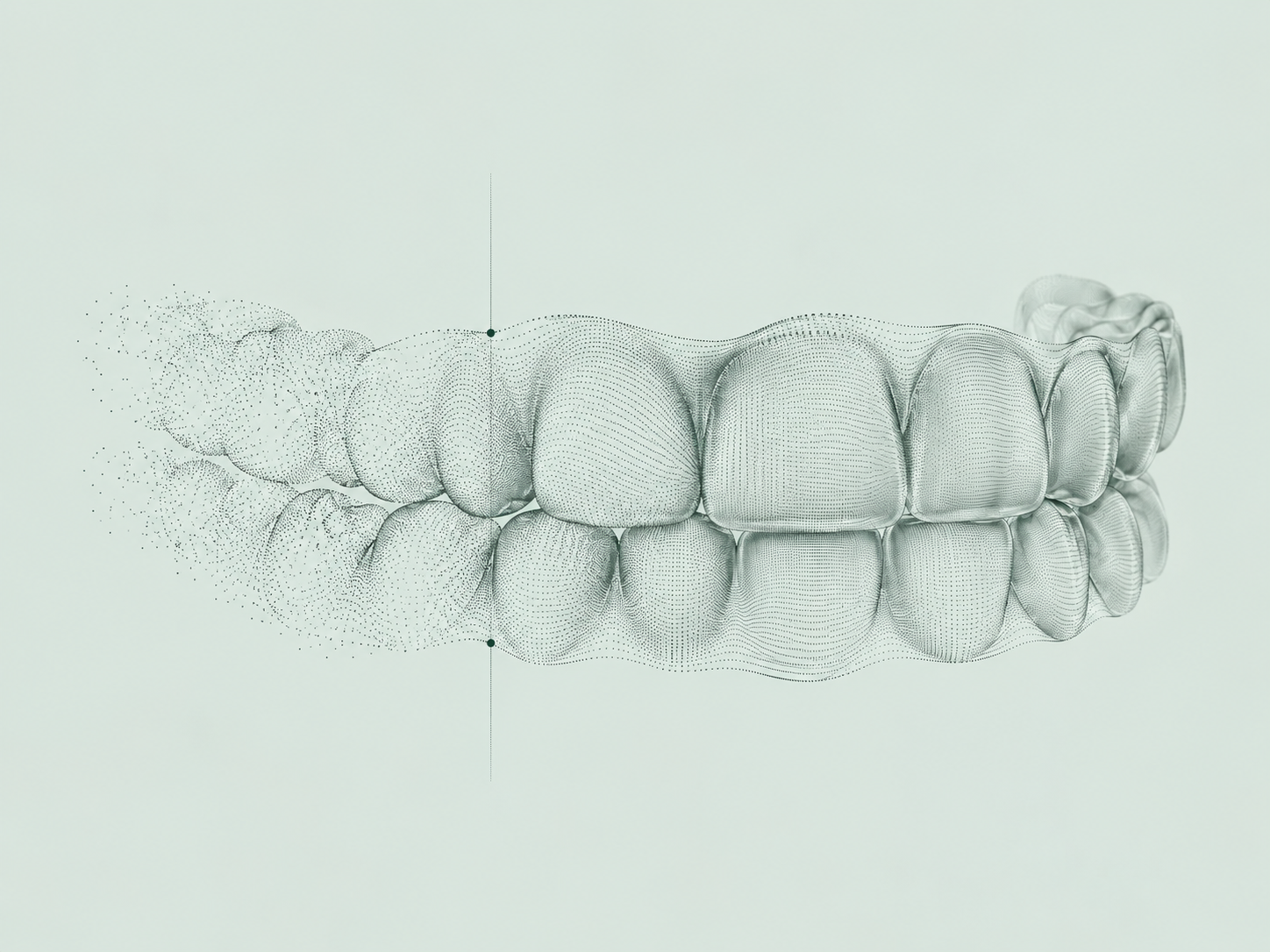
Explore the illustration to understand the vertical overlap, the lower front teeth and the bite as a whole.

A deep bite is about vertical overlap. Your dentist checks how much of the lower front teeth is covered when your back teeth meet.
The overlap can reflect the way your jaws develop, the position of your teeth or changes to your bite. Understanding the cause helps your clinician choose an appropriate approach.
Inherited jaw shape and growth patterns can influence the vertical relationship between the front teeth.
The height and angle of the front teeth affect how much the upper and lower teeth overlap.
Your clinician checks the height and contact of the back teeth, as well as any missing teeth or changes in support.
Tooth wear, grinding and changes in tooth position can complicate the picture. An examination establishes what is contributing in your case.
You might see very little of your lower front teeth when you bite together. Other signs can include uneven wear or contact with the gum or the roof of your mouth. Some deep bites cause no obvious symptoms, so an examination is more useful than guessing from a photo.
The plan considers tooth positions, jaw relationships and the amount of bite correction needed. Aligners are one option, rather than the answer for every case.
Clear aligners can correct selected deep bites through planned tooth movements. Attachments, bite ramps or elastics may be included to help achieve the intended movements.
Explore clear alignersBraces can be used to align teeth and adjust the bite. Your clinician may recommend them when the required movements or bite correction suit a fixed appliance.
Some bites need additional appliances or a different specialist approach. Significant jaw discrepancies, or teeth with substantial wear, may need coordinated orthodontic and other dental care.
Moving teeth and changing jaw relationships are different goals. In selected severe skeletal cases, jaw surgery may be considered alongside orthodontics. Your clinician explains the findings, available options and any referrals before you decide.
Clear aligners can help with selected deep bites. Your treating dentist assesses the tooth movements required, your jaw relationships and the health of your teeth and gums, with specialist orthodontic input into planning. The aim is a bite that works together, as well as straighter teeth.
It starts with what you’ve noticed. If aligners are right for you, your dentist will explain what needs to move and how your progress will be checked.
Explore how Aalto care worksTell us what you’ve noticed and what you’d like to change.
Start the quizYour treating dentist examines your teeth, gums and bite and gathers records to help plan your care.
Your dentist reviews the proposed movements with specialist orthodontic input, then explains the timing and fee before you decide.
Send scans from home with DentalMonitoring. Your dentist follows your progress and lets you know when to come in.

Aalto treatment starts at US$2,199. Your treating practice confirms suitability, the treatment level and your personalized quote after assessment.
A deep bite is an excessive vertical overlap of the upper front teeth over the lower front teeth when you close your back teeth together. Your dentist assesses the depth of overlap, tooth contacts and any effect on the surrounding tissues.
Overbite describes the vertical overlap of the front teeth. A deep bite means that overlap is excessive. Overjet is different: it describes how far the upper front teeth sit ahead of the lower front teeth horizontally. You can have both.
Clear aligners can treat selected deep bites. Suitability depends on the tooth movements needed, jaw relationships and the health of your teeth and gums. Your clinician may recommend attachments, bite ramps, elastics or another approach.
Yes. Adults can have their bite assessed and treated. The plan depends on whether the concern mainly involves tooth positions, jaw relationships or a combination of the two. Significant skeletal differences may require specialist treatment beyond aligners.
No. A slight vertical overlap is normal, and the need for treatment depends on your individual findings. Your dentist checks for excessive overlap, unwanted tooth contacts, wear and contact with the gum or palate, alongside your goals.
There is no single treatment time for a deep bite. The amount of correction, the movements involved, any additional appliances and how closely you follow the plan all matter. Your clinician explains the expected timeline after assessment.
An excessive overlap can contribute to abnormal tooth wear or contact with the gum or palate. These findings are not present in every deep bite. If you notice soreness, chipping or a change in your bite, arrange a dental examination.
Aalto clear aligner treatment starts at US$2,199. Your treating practice confirms suitability, the treatment level and your personalized quote after assessment. If a different appliance or specialist approach is recommended, its costs will be discussed separately.
Yes, retention is an important part of keeping teeth in their planned positions after orthodontic treatment. Your clinician will explain which retainers you need, how to wear them and when to have them checked or replaced.
Patient information informed by the American Association of Orthodontists: understanding deep bites ↗ and British Orthodontic Society: orthodontics for adults ↗. General information does not replace an individual assessment.
Start with a few questions about your teeth. Your dentist can assess your suitability in person.


